Complete Guide to Generac Generator Installation Costs in the United States (2026)
How Much Does Generac Generator Installation Cost in 2026?
Power outages are becoming more frequent across the United States due to extreme weather events, aging infrastructure, and increased energy demand. A Generac standby generator automatically kicks in when the power goes out, protecting your home, family, and essential systems.
Quick Answer: The total cost to purchase and install a Generac home standby generator ranges from $5,000 to $15,000+ , with most homeowners paying between $7,000 and $10,000 for a complete installation . The generator itself costs $2,500–$6,000 , while professional installation adds $2,500–$9,000+ depending on fuel type, electrical panel requirements, and site conditions .
National Average Cost Summary by Generator Size
| Generator Size (kW) | Typical Home Size | Equipment Cost | Installed Cost Range |
|---|---|---|---|
| 10–12 kW | Small home (1,500–2,000 sq ft) | $2,500 – $3,500 | $5,000 – $7,500 |
| 14–16 kW | Medium home (2,000–3,000 sq ft) | $3,500 – $4,500 | $6,500 – $9,000 |
| 18–20 kW | Large home (3,000–4,000 sq ft) | $4,000 – $5,000 | $8,000 – $11,000 |
| 22–24 kW | Very large home (4,000–5,000+ sq ft) | $4,500 – $6,000 | $10,000 – $14,000 |
| 26–32 kW | Estate homes with high demand | $6,000 – $8,000 | $12,000 – $18,000+ |
Generac Generator Cost Breakdown by Component
Understanding where your money goes helps you make informed decisions and compare quotes accurately:
1. Generator Equipment Cost
| Model Series | kW Range | Equipment Cost | Best For |
|---|---|---|---|
| Generac Guardian Series | 10–24 kW | $2,500 – $5,500 | Most residential applications |
| Generac Protector Series | 20–60 kW | $4,500 – $10,000 | Larger homes, light commercial |
| Generac EcoGen Series | 12 kW | $3,000 – $4,000 | Off-grid, solar battery backup |
| Generac PWRCell | 10–18 kW | $4,000 – $6,000 | Integrated with battery storage |
2. Professional Installation Cost Breakdown
Installation typically accounts for 40–60% of the total project cost :
| Installation Component | Cost Range |
|---|---|
| Permits and inspections | $200 – $500 |
| Concrete pad | $300 – $800 |
| Transfer switch | $500 – $1,500 |
| Natural gas/propane line installation | $500 – $2,500 |
| Electrical wiring and connections | $800 – $2,500 |
| Labor (2–4 days, 2–3 technicians) | $1,500 – $4,000 |
| Total Installation | $2,500 – $9,000+ |
Generac Generator Installation Cost by Fuel Type
Your choice of fuel significantly impacts both equipment and installation costs:
Natural Gas Generators
- Equipment cost: $2,500 – $6,000
- Installation cost: $2,500 – $7,000
- Total installed: $5,000 – $13,000
- Pros: Unlimited fuel supply (from utility), no refueling needed
- Cons: Requires connection to gas line (may need extension), inoperable if gas service fails
Liquid Propane (LP) Generators
- Equipment cost: $2,800 – $6,500
- Installation cost: $3,000 – $8,000
- Total installed: $5,800 – $14,500
- Pros: Propane stores indefinitely, often cheaper installation if tank exists
- Cons: Requires tank (500–1,000 gallon recommended), need refilling
Diesel Generators
- Equipment cost: $4,000 – $8,000
- Installation cost: $3,000 – $8,000
- Total installed: $7,000 – $16,000
- Pros: Fuel efficient, long engine life
- Cons: Noise, emissions, fuel storage concerns, less common for residential
Generac Generator Installation Cost by Transfer Switch Type
The transfer switch is the device that safely disconnects your home from the grid and connects it to the generator:
| Transfer Switch Type | Cost (Installed) | How It Works |
|---|---|---|
| Automatic Transfer Switch (ATS) | $800 – $2,000 | Detects power outage, starts generator automatically, transfers power within seconds |
| Manual Transfer Switch | $500 – $1,200 | Requires you to manually start generator and flip switch |
| Smart Transfer Switch | $1,200 – $2,500 | Prioritizes circuits, integrates with home automation, manages load |
Generac’s Smart Management Modules allow a smaller generator to power larger homes by intelligently shedding and restoring loads like HVAC, water heaters, and pool pumps .
Generac Models and Features (2026)
Guardian Series (Most Popular for Homes)
The Guardian series is Generac’s flagship residential line, featuring:
- True Power Technology: Less than 5% THD (total harmonic distortion) for sensitive electronics
- Mobile Link remote monitoring: Check generator status from your smartphone
- Quiet-Test mode: Self-tests weekly at low RPM for quiet operation
- All-weather enclosure: Withstands extreme temperatures and weather
| Model | Power | Key Features | MSRP |
|---|---|---|---|
| 7043 | 22 kW | 3-liter engine, Mobile Link, Quiet-Test | $4,999 |
| 7224 | 24 kW | Enhanced cooling, 5-year warranty | $5,499 |
| 7039 | 20 kW | Best value for medium homes | $4,299 |
| 7042 | 18 kW | Compact footprint, easy installation | $3,999 |
| 7036 | 16 kW | Entry-level whole-house | $3,499 |
Protector Series (Heavy-Duty)
For larger homes or light commercial applications:
- Protector 30 kW: $6,999, powers homes up to 6,000+ sq ft
- Protector 45 kW: $8,999, commercial-grade reliability
EcoGen Series (Off-Grid & Solar)
Designed for homes with solar and battery systems:
- 12 kW EcoGen: $3,999, works with most battery inverters

Installation Cost Factors That Affect Your Final Quote
1. Site Preparation and Location
| Site Condition | Cost Impact |
|---|---|
| Flat, accessible site near gas/electric | Baseline |
| Sloped or difficult terrain | +$500 – $2,000 |
| Long distance from gas meter | +$15–$30 per foot |
| Long distance from electrical panel | +$20–$50 per foot |
| Need for concrete pad | +$300 – $800 |
| Landscaping restoration | +$500 – $2,000 |
2. Electrical Panel Considerations
Your home’s electrical panel may need upgrades to accommodate a generator:
| Electrical Work | Cost |
|---|---|
| Standard transfer switch installation | Included in base install |
| Sub-panel installation for critical circuits | +$500 – $1,500 |
| Main panel upgrade (200A service) | +$1,500 – $3,000 |
| Service entrance rating upgrade | +$500 – $1,500 |
Pro tip: If your home has an older panel (Federal Pacific, Zinsco, or pushmatic), replacement is strongly recommended before generator installation for safety.
3. Fuel Line Installation
Natural Gas Line Installation:
- If gas meter is within 10–20 feet: $500 – $1,000
- If gas line needs extension (per foot): $15 – $30
- Larger gas meter required for >20kW units: $500 – $1,500
Propane Tank Installation:
- 500-gallon above-ground tank: $1,500 – $2,500
- 500-gallon underground tank: $3,000 – $5,000
- 1,000-gallon tank: $3,500 – $7,000
4. Permit and Inspection Fees
| Location | Typical Permit Cost |
|---|---|
| Most jurisdictions | $200 – $500 |
| High-cost areas (CA, NY) | $500 – $1,000 |
Permits typically cover electrical, gas, and building inspections—essential for safety and insurance validity.
5. Labor Rates by Region
| Region | Typical Labor Rate (per hour) |
|---|---|
| Northeast | $100 – $200 |
| West Coast | $100 – $200 |
| Midwest | $80 – $150 |
| South | $80 – $150 |
Most installations take 2–4 days with a 2–3 person crew .
Generac Generator Installation Cost by State (2026 Estimates)
| State | Average Installed Cost (20kW unit) |
|---|---|
| California | $10,000 – $15,000 |
| Texas | $7,500 – $11,000 |
| Florida | $7,500 – $12,000 |
| New York | $9,000 – $14,000 |
| Pennsylvania | $8,000 – $12,000 |
| Illinois | $8,000 – $12,000 |
| Ohio | $7,000 – $11,000 |
| Georgia | $7,000 – $11,000 |
| North Carolina | $7,000 – $11,000 |
| Michigan | $7,500 – $12,000 |
| Colorado | $8,000 – $12,500 |
| Washington | $8,500 – $13,000 |
Metropolitan area premiums:
- New York City: +20–30%
- Los Angeles: +20–30%
- San Francisco: +30–40%
- Boston: +20–30%
- Seattle: +15–25%
Complete Installation Process: Step by Step
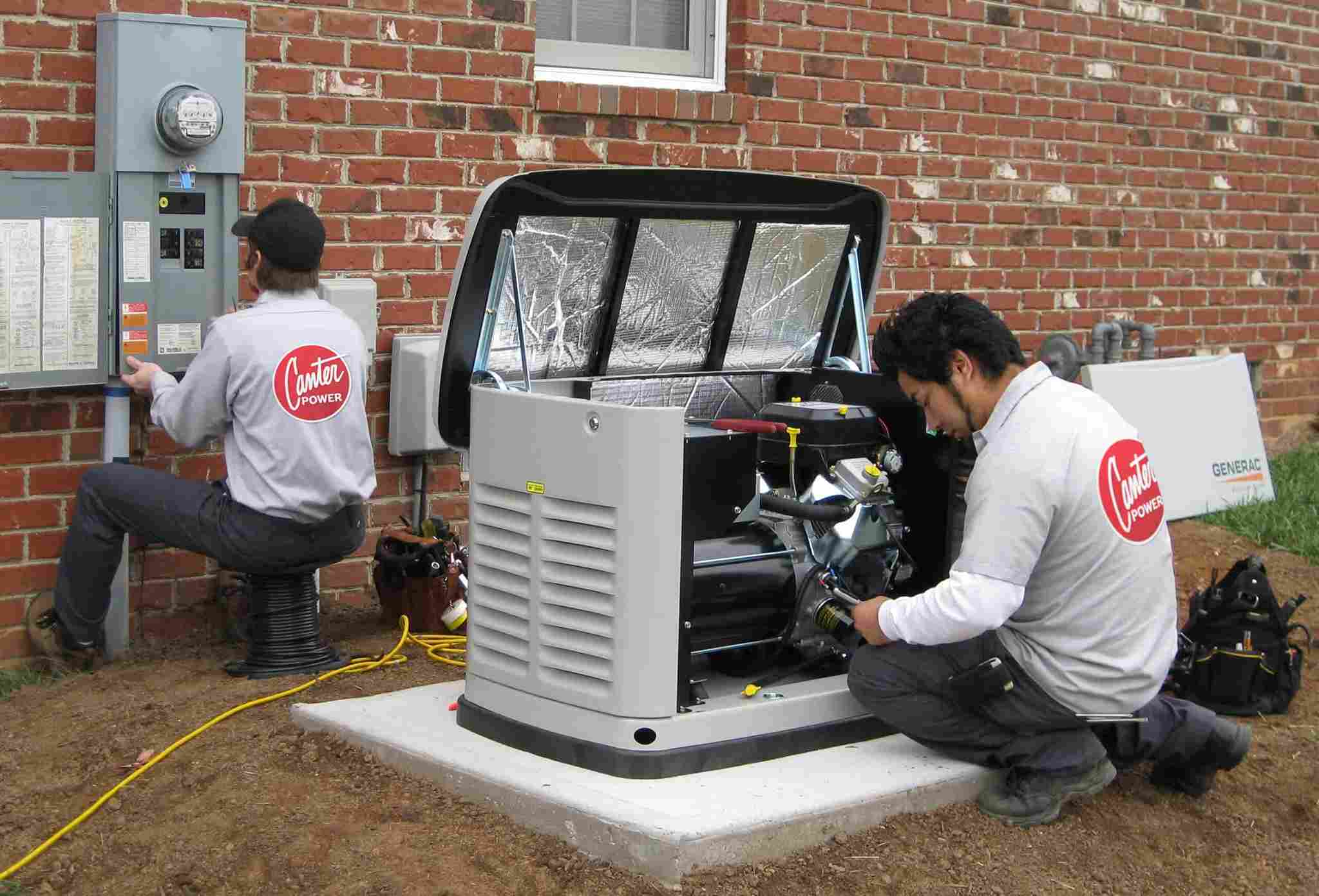
Day 1: Site Visit and Assessment
- Generator sizing calculation based on your home’s needs
- Site evaluation for optimal placement
- Gas line and electrical panel assessment
- Permit application (handled by installer)
Day 2: Site Preparation
- Concrete pad poured (cures 24–48 hours)
- Trenching for gas and electrical lines (if needed)
- Gas line installation from meter to generator location
Day 3: Equipment Installation
- Generator delivered and mounted on pad
- Transfer switch installed next to main panel
- Electrical connections from transfer switch to generator
- Gas line connection to generator
Day 4: Testing and Commissioning
- System tested under load
- Automatic transfer verified
- Mobile Link setup and demonstration
- Final inspection scheduling
Day 5: Final Inspection
- Local building department inspects work
- Utility may inspect gas connection
- Final sign-off and paperwork
How to Choose the Right Size Generac Generator
Proper sizing is critical—too small and you’ll overload the system; too large and you waste money on equipment and fuel.
Essential Circuits to Consider
- Refrigerator/freezer: 600–800 watts
- Sump pump: 800–1,200 watts
- Well pump: 1,000–2,500 watts
- Furnace fan: 800–1,200 watts
- AC unit (central): 3,000–5,000 watts
- Water heater: 4,000–4,500 watts
- Lighting/outlets: 1,500–3,000 watts
- Kitchen appliances: 2,000–4,000 watts
Generac Sizing Guidelines
| Home Size | Recommended Size | What It Powers |
|---|---|---|
| Small (1,500–2,000 sq ft) | 10–14 kW | Essential circuits only (fridge, furnace, lights, sump) |
| Medium (2,000–3,000 sq ft) | 16–20 kW | Essential circuits + one 3-ton AC + well pump |
| Large (3,000–4,000 sq ft) | 20–22 kW | Most of home, including AC, kitchen, and major appliances |
| Very Large (4,000–5,000+ sq ft) | 24–26 kW | Whole home with multiple AC units |
Pro tip: Generac’s online sizing calculator or a professional assessment ensures accurate sizing. Many installers offer free consultations.
Permits and Code Requirements
Generator installation is heavily regulated for safety. Your installer should handle all permits, which typically include:
- Electrical permit: For transfer switch and connections
- Gas permit: For fuel line installation
- Building permit: For concrete pad and placement
- Zoning permit: If setback requirements apply
National codes that apply:
- NEC Article 702 – Standby generators
- NEC Article 445 – Generator installation
- International Fuel Gas Code – Gas piping
- Local amendments – Vary by jurisdiction
Return on Investment and Home Value Impact
Resale Value
According to the National Association of Realtors, a standby generator can recover 50–70% of its cost at resale, depending on your market . In areas prone to outages (Florida, Texas, Northeast), the ROI can be significantly higher.
Insurance Benefits
Some insurers offer discounts of 5–15% on homeowners insurance with a permanently installed standby generator, especially if you have:
- Sump pump coverage
- Frozen pipe protection
- Food spoilage coverage
Peace of Mind Value
Beyond dollars, consider the value of:
- No frozen pipes during winter outages
- Food preservation during extended outages
- Medical device reliability
- Comfort during extreme temperatures
- Security system operation
Generac Generator Maintenance Costs
| Maintenance Item | Frequency | Cost |
|---|---|---|
| Oil and filter change | Annually or 100–200 hours | $150 – $300 |
| Spark plug replacement | Annually | $50 – $100 |
| Air filter replacement | Annually | $30 – $60 |
| Battery check/replacement | Every 3–5 years | $100 – $250 |
| Full professional service | Annually | $200 – $400 |
Generac recommends professional maintenance annually. Many installers offer service plans ($200–$400/year) that include priority scheduling and discounts.
Generac vs. Competitors
| Brand | Price Range | Warranty | Notable Features |
|---|---|---|---|
| Generac | $$–$$$ | 5 years | Market leader, mobile link, wide dealer network |
| Kohler | $$$–$$$$ | 5 years | Premium build, quiet operation, commercial heritage |
| Cummins | $$$–$$$$ | 5 years | Industrial reputation, reliable engines |
| Briggs & Stratton | $$–$$$ | 3–5 years | Good value, but company has financial uncertainty |
| Champion | $–$$ | 3 years | Budget option, fewer dealer locations |
Generac’s advantages:
- Largest dealer/installer network in US
- Most replacement parts readily available
- Mobile Link remote monitoring (best-in-class)
- Extensive model range for every need
Frequently Asked Questions
How long does Generac generator installation take?
Most installations take 2–5 days total, including permitting, site prep, installation, and inspection. The actual installation work is typically 1–2 days .
Do I need a permit for generator installation?
Yes, almost all jurisdictions require permits for electrical and gas work. A licensed installer will handle this for you .
Can I install a Generac generator myself?
Not recommended and often illegal. Professional installation ensures safety, code compliance, warranty validity, and proper operation .
How loud are Generac generators?
Modern Generac generators operate at 55–65 decibels at 23 feet—about as loud as a normal conversation or window air conditioner . Quieter models and sound-attenuating enclosures are available.
What size generator do I need for my house?
A typical 2,500 sq ft home needs 18–22 kW to power most essentials including AC. A professional load calculation is the only way to be sure.
Do generators run on natural gas or propane?
Generac offers both. Natural gas is convenient (unlimited supply), while propane stores indefinitely and works without utility gas service.
How often should my generator run?
Generators automatically exercise weekly (usually at a quiet time) to ensure readiness. This keeps components lubricated and batteries charged.
What maintenance does a generator need?
Annual service including oil change, filter replacement, and inspection is recommended. Generac’s Mobile Link app reminds you when service is due.
Is a Generac Generator Worth the Investment?
Consider a Generac standby generator if:
✅ You experience frequent or long power outages
✅ You work from home and need internet/computer uptime
✅ You have medical equipment requiring power
✅ You have a sump pump (basement flooding risk)
✅ You live in an area with extreme weather (hurricanes, ice storms, heat waves)
✅ You want to protect frozen food and avoid spoilage
✅ You value convenience and peace of mind
Payback Scenarios
| Scenario | Annual Outage Hours | Potential Losses Without Generator | Years to Recoup $10k Investment* |
|---|---|---|---|
| Mild outage area | 10–20 hours | $200–$500 (food, inconvenience) | 20–50 years |
| Moderate outage area | 50–100 hours | $1,000–$3,000 (food, plumbing, hotel) | 3–10 years |
| Severe outage area | 100+ hours | $5,000+ (flooding, pipes, total loss) | 1–3 years |
*Based on avoided losses; actual financial payback varies
Conclusion: Ready for Backup Power?
A Generac home standby generator is a significant investment, but for many homeowners, it’s one of the most valuable purchases they’ll make. When the power goes out and your neighbors are in the dark, you’ll be glad you made the choice.
Steps to Get Started
- Determine your needs – List essential circuits and calculate approximate wattage
- Get multiple quotes – Contact 3–5 Generac dealers in your area
- Compare proposals – Look at equipment, installation details, warranties, and total cost
- Check credentials – Verify licenses, insurance, and references
- Schedule installation – Plan for 2–5 day project timeline
- Enjoy peace of mind – Never worry about power outages again