Complete Guide to Hardwood Floor Refinishing Costs in the United States (2026)
How Much Does Hardwood Floor Refinishing Cost in 2026?
Hardwood floors are one of the most beautiful and durable features in any home, but even the best-maintained floors eventually show signs of wear. Scratches, fading, and dull finishes can make your space feel tired. The good news? You don’t need to replace them—refinishing can restore their original beauty at a fraction of the cost.
Quick Answer: In 2026, professional hardwood floor refinishing costs between $3.50 and $8.00 per square foot, with most homeowners paying $3.50 to $6.50 per square foot for a standard project . For a typical 1,000-square-foot home, expect to pay $3,500 to $6,500 . Refinishing is 40–60% cheaper than replacement, which runs $10–$18 per square foot .
National Average Cost Summary
| Home Size | Low-End Estimate | Mid-Range Estimate | High-End Estimate |
|---|---|---|---|
| 500 sq ft | $1,750 | $2,500 | $3,250 |
| 1,000 sq ft | $3,500 | $5,000 | $6,500 |
| 1,500 sq ft | $5,250 | $7,500 | $9,750 |
| 2,000 sq ft | $7,000 | $10,000 | $13,000 |
Hardwood Refinishing Cost Per Square Foot (2026)
Refinishing costs vary based on several factors, but here’s the current pricing landscape:
| Project Scope | Cost Per Square Foot |
|---|---|
| Basic sanding and recoat (light wear) | $2.50 – $4.00 |
| Standard refinishing (3-step sanding, 2-3 coats) | $3.50 – $6.50 |
| Complex refinishing (exotic wood, heavy damage) | $6.00 – $8.50 |
| Screen and recoat only (no sanding) | $1.50 – $3.00 |
What’s included in a standard refinishing quote:
- Moving furniture (often extra fee)
- Sanding with progressive grits (40→60→100→120)
- Repairing minor gaps and holes with wood filler
- Deep cleaning and dust removal
- Stain application (optional)
- 2–3 coats of protective polyurethane finish
- Final inspection and cleanup
Factors That Determine Your Hardwood Refinishing Cost
1. Floor Condition and Preparation Needs
The current state of your floors is the biggest cost driver:
| Condition | Cost Impact | What’s Required |
|---|---|---|
| Light wear (dull finish, minor scratches) | Baseline | Standard sanding and recoat |
| Moderate wear (deep scratches, water rings) | +10–20% | Additional sanding, spot repairs |
| Heavy wear (gouges, pet damage, stains) | +20–40% | Board replacement, intensive sanding |
| Severe damage (warping, cupping, rot) | Replacement may be needed | Structural issues require new flooring |
- Cupping (edges higher than center): Often caused by humidity, usually sandable
- Buckling (boards lifted from subfloor): Usually requires replacement
- Water damage: May require board replacement if deep
2. Wood Type and Hardness
Different wood species require different sanding approaches and labor intensity :
| Wood Type | Cost Per Square Foot | Notes |
|---|---|---|
| Red Oak / White Oak | $3.50 – $4.50 | Most common, easy to refinish |
| Maple | $4.50 – $6.00 | 30% more labor due to hardness |
| Hickory | $5.00 – $7.00 | Very hard, wears sandpaper faster |
| Cherry / Walnut | $5.00 – $7.00 | Exotic species, careful handling needed |
| Pine / Fir | $3.50 – $5.00 | Softer, easier to sand but prone to dents |
| Prefinished / Factory-coated | $7.00 – $8.50 | Aluminum oxide coating requires specialized equipment |
The Janka Hardness Scale explains why harder woods cost more: Hickory (1820) takes much longer to sand than Pine (690–1225) and wears down sandpaper faster .
3. Engineered Hardwood vs. Solid Hardwood
This distinction is critical because not all floors can be refinished :
Solid Hardwood (3/4″ thick):
- Can be refinished 5–10 times over its lifetime
- Standard refinishing process applies
- Cost: $3.50–$6.50 per sq ft
Engineered Hardwood:
- Has a top veneer (wear layer) of real wood
- Must check veneer thickness before sanding :
- 1mm or less: Cannot be sanded (screen and recoat only)
- 2mm: May allow one light sanding
- 3mm: Can be refinished 1–2 times
- 4mm+: Can be refinished multiple times
- Cost: $4.00–$7.00 per sq ft (requires extra care)
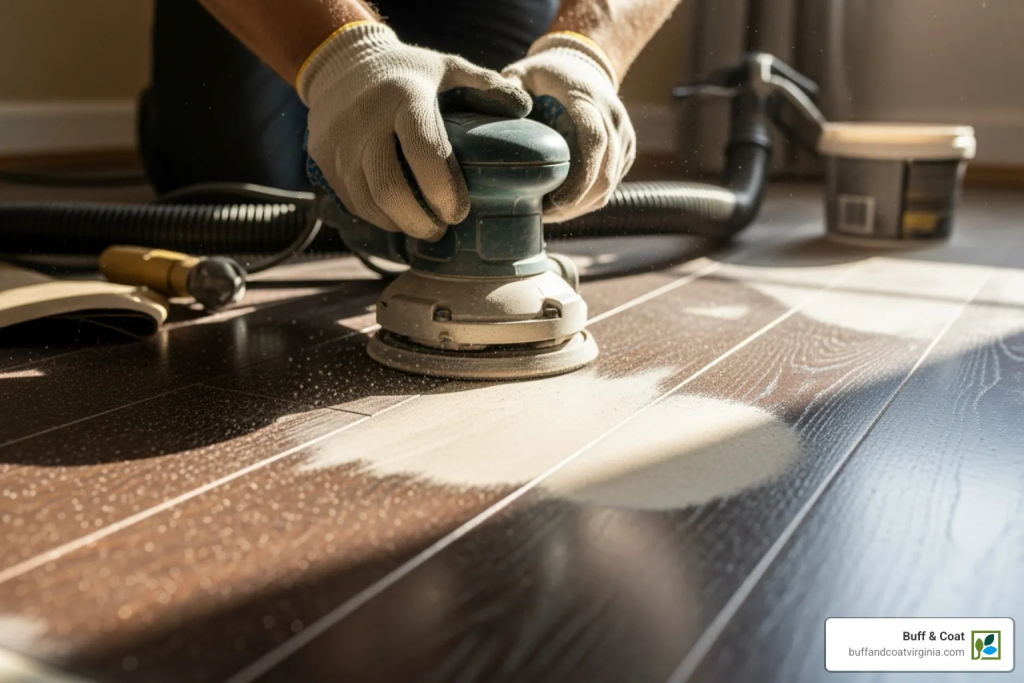
Engineered hardwood requires careful assessment of the wear layer before refinishing
4. Finish and Stain Choices
| Finish Type | Cost per Gallon | Cost per Sq Ft (Materials) | Characteristics |
|---|---|---|---|
| 1-Component Water-Based | $25–$50 | $0.50–$1.00 | Clear, fast-drying, low odor |
| 2-Component Water-Based | $40–$70 | $0.75–$1.50 | Commercial grade, extremely durable |
| Oil-Based Polyurethane | $20–$45 | $0.50–$1.00 | Amber tone, strong odor, longer drying |
| Custom Stain Colors | +$1–$2 per sq ft | Dark stains and white-wash require extra labor |
Water-based finishes are increasingly popular in 2026 due to lower VOCs, faster drying, and no ambering . Oil-based finishes provide a traditional warm look but take longer to cure.
5. Labor Costs by Region
Labor accounts for the largest portion of your refinishing cost, typically $2–$7 per square foot . Rates vary significantly by location:
| Region | Average Cost Per Square Foot |
|---|---|
| Northeast | $5.00 – $8.00 |
| West Coast | $5.00 – $8.00 |
| Midwest | $3.50 – $5.50 |
| South | $3.50 – $5.50 |
| Major Metropolitan Areas | Add 20–30% |
Example local costs from 2026 data:
- Teaneck, New Jersey: $4,166–$4,539 for average project
- Fairfield, Connecticut: $275–$3,165 depending on scope
- Arlington Heights, Illinois: $250–$2,890 range
6. Additional Services and Hidden Costs
| Service | Typical Cost |
|---|---|
| Furniture moving | $50–$200 per room |
| Stair refinishing | $25–$85 per step |
| Dustless sanding upgrade | Often included, otherwise +$0.50–$1.00/sq ft |
| Baseboard removal/reinstallation | $1–$3 per linear foot |
| Subfloor repair | $3–$12 per square foot |
| Carpet removal | $0.25–$1 per square foot |
| Board replacement | $6–$12 per square foot |
| Permit fees (if required) | $100–$400 |
Refinishing vs. Replacement: Cost Comparison
| Option | Cost Per Square Foot | Lifespan Extension | ROI* |
|---|---|---|---|
| Refinishing | $3.50 – $6.50 | 15–25 years | 147% |
| Replacement (domestic wood) | $8 – $15 | 30–50 years | 118% |
| Replacement (exotic wood) | $15 – $25 | 50+ years | 100–110% |
*According to the National Association of Realtors, refinishing hardwood floors has a cost recovery of approximately 147% —meaning you could see a $4,410 increase in home value from a $3,000 investment .
When to Refinish vs. Replace
Refinish if:
- Floors are structurally sound
- Main issues are scratches, dullness, or fading
- You want to change the color
- Wear layer is thick enough (especially for engineered wood)
Replace if:
- Floors are extremely thin from past sandings
- There’s major subfloor damage
- Boards are severely warped, rotted, or buckled
- Water damage has penetrated deeply
The Hardwood Refinishing Process: Step by Step
A typical refinishing project takes 3–5 days :
Day 1: Preparation and Sanding
- Remove all furniture and window coverings
- Remove shoe molding or baseboards
- Cover vents and doorways with plastic
- Sand with coarse grit (40–60) to remove old finish
- Sand with medium grit (80–100)
- Vacuum thoroughly
Day 2: Fine Sanding and Repairs
- Sand with fine grit (100–120)
- Fill gaps and holes with wood filler
- Final sanding with ultra-fine grit (120–150)
- Complete dust removal (tack cloth or damp mop)
Day 3: Staining (Optional)
- Apply pre-stain conditioner
- Apply stain evenly with applicator
- Wipe excess stain
- Allow to dry completely (12–24 hours)
Day 4: Finish Application
- Apply first coat of polyurethane
- Allow to dry (4–24 hours depending on product)
- Lightly buff between coats
- Apply second coat
Day 5: Final Coat and Curing
- Apply third coat (recommended for durability)
- Initial dry: 24 hours before light foot traffic
- Full cure: 3–7 days before replacing furniture and rugs
Pro tip: Water-based finishes dry faster (2–4 hours between coats) than oil-based (12–24 hours), shortening your project timeline .
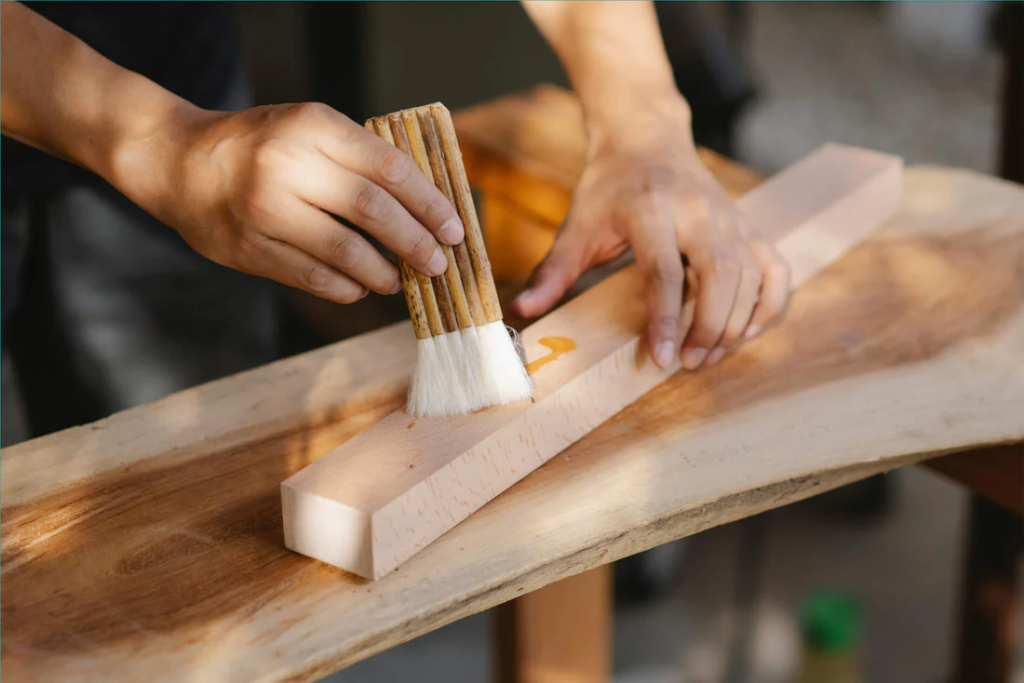
Professional staining requires careful application and wiping for even color
DIY vs. Professional Refinishing: Cost and Risk Analysis
DIY Refinishing Costs (for 500 sq ft)
| Item | Cost |
|---|---|
| Drum sander rental (2 days) | $100–$160 |
| Edger rental (2 days) | $70–$90 |
| Sandpaper assortment | $30–$60 |
| Shop vacuum | $40–$180 (purchase) or $15–$30/day rental |
| Stain (1 gallon) | $20–$60 |
| Polyurethane (2–3 gallons) | $50–$210 |
| Applicators, tape, plastic | $30–$50 |
| Total DIY Cost | $340–$840 |
Professional Cost for Same Area: $1,750–$3,250
The Risks of DIY Sanding
Professional drum sanders are powerful machines that require experience:
- Drum marks: If you stop moving even for a second, the sander will dig a permanent groove
- Uneven sanding: Inconsistent pressure creates wavy floors
- Thickness errors: Especially risky for engineered hardwood
- Dust control: Professional dustless systems capture 99% of particles
- Finish problems: Bubbles, streaks, and peeling are common in DIY finishes
When DIY is feasible:
- Small rooms (under 200 sq ft)
- Solid hardwood with thick wear layer
- Previous refinishing experience
- You can handle the physical demands
When professional is mandatory:
- Engineered hardwood with thin veneer
- Large areas or open floor plans
- Complex layouts with many corners
- Prefinished floors with aluminum oxide coating
- Any uncertainty about floor type or condition
How to Save Money on Hardwood Refinishing
- Refinish before major damage occurs – Regular maintenance prevents costly repairs
- Choose standard stains and finishes – Custom colors add $1–$2 per sq ft
- Empty rooms yourself – Save $50–$200 in moving fees
- Bundle multiple rooms – Larger projects get better per-square-foot rates
- Book in off-season – Winter months (January–February) may offer 10% discounts
- Consider screen and recoat – If floors are in good condition, this costs 50–70% less
- Get multiple quotes – Compare 3–5 contractors for the best value
Frequently Asked Questions
How long does hardwood floor refinishing take?
Most projects take 3–5 days for sanding, staining (optional), and applying 2–3 coats of finish. You can typically walk on the floors in light socks after 24 hours, but furniture should wait 3–7 days for full curing .
Can all hardwood floors be refinished?
No. Solid hardwood (3/4″) can be refinished 5–10 times. Engineered hardwood depends on the wear layer thickness—if it’s less than 2mm, only a screen and recoat is safe .
How many times can you refinish hardwood floors?
- Solid hardwood: 5–10 times over its lifetime
- Engineered hardwood (4mm+ wear layer): 2–5 times
- Engineered hardwood (2–3mm): 1–2 times
- Engineered hardwood (1mm or less): Cannot be sanded
Does refinishing remove deep scratches?
Yes, sanding removes the top layer of wood, eliminating surface scratches, minor stains, and the old finish. Deep gouges may require board replacement first.
What’s the difference between sanding and screening?
- Sanding: Removes a thin layer of wood to eliminate scratches and old finish (for floors in worse condition)
- Screening: Lightly abrades the existing finish for better adhesion of a new top coat (for floors in good condition)
How do I know if my engineered floor can be refinished?
Check manufacturer documentation for wear layer thickness. If unavailable, a professional can make a small inconspicuous test cut to measure .
What’s the best finish for hardwood floors?
For most homes in 2026, water-based polyurethane offers the best combination of durability, fast drying, low VOCs, and clear appearance that won’t yellow over time .
Is Hardwood Floor Refinishing Worth It?
Absolutely. With an average ROI of 147% according to the National Association of Realtors, refinishing is one of the most valuable home improvements you can make . Beyond financial returns, you’ll enjoy:
- Transformed appearance – Like having new floors at 40–60% of the cost
- Extended floor life – Adds 15–25 years to your flooring
- Healthier home – Removal of allergens trapped in old finish
- Increased home value – Hardwood floors are a top buyer priority
Final Recommendations
- Start with an inspection – Determine your floor type, wear layer thickness, and condition
- Get 3–5 quotes from licensed, insured contractors
- Ask about dustless sanding – It’s worth the small premium
- Choose quality finishes – Bona, Loba, and Basic Coatings are industry leaders
- Plan for curing time – Don’t rush to move furniture back