
Complete Guide to Structural Engineer for Foundation Inspection Near Me: Costs & What to Expect (2026)
Do You Need a Structural Engineer for Your Foundation?
If you’ve noticed cracks in your walls, doors that won’t close properly, or uneven floors, your home’s foundation may be sending you distress signals. While some foundation issues are cosmetic, others can threaten the structural integrity of your entire home. This is where a structural engineer becomes your most valuable ally.
A structural engineer is a licensed professional who can objectively assess your foundation’s condition, determine whether cracks are dangerous or merely cosmetic, and provide engineered repair solutions. Unlike foundation repair companies that may have a financial incentive to recommend work, structural engineers offer unbiased assessments focused solely on safety and structural integrity .
Quick Answer: Hiring a structural engineer for a foundation inspection costs between $300 and $1,500+ , with most homeowners paying $500 to $1,000 for a thorough inspection and written report. The final price depends on your home’s size, foundation type, location, and the complexity of the issues .
National Average Cost Summary
| Home Size (sq ft) | Average Inspection Cost Range |
|---|---|
| 1,000 | $300 – $500 |
| 1,500 | $400 – $750 |
| 2,000 | $500 – $900 |
| 2,500 | $600 – $1,000 |
| 3,000+ | $750 – $1,200+ |
Foundation Inspection Cost by Type
The type of foundation your home has significantly impacts inspection complexity and cost :
| Foundation Type | Average Inspection Cost |
|---|---|
| Slab Foundation | $300 – $600 |
| Crawl Space | $400 – $800 |
| Basement | $500 – $1,000 |
| Pier and Beam | $700 – $1,000 |
How Structural Engineers Charge for Foundation Inspections
Structural engineers typically use one of several fee structures :
| Fee Structure | Average Cost | Best For |
|---|---|---|
| Hourly Rate | $100 – $250 per hour | Small homes, simple visual checks |
| Flat Project Fee | $400 – $1,200 | Standard residential inspections |
| Per Square Foot | $1.50 – $6.00 per sq ft | Large homes, commercial properties |
| Percentage of Construction | 1% – 10% of project cost | New construction, major renovations |
What’s included in a typical inspection fee:
- On-site visual assessment (1–3 hours)
- Moisture meter and crack monitoring readings
- Detailed written report with findings
- Photographs of problem areas
- Professional recommendations
- Engineer’s stamp/seal on report (if required)
Foundation Inspection Cost by Inspection Type
Different inspection scenarios require different levels of effort and expertise :
| Inspection Type | Average Cost Range |
|---|---|
| Pre-purchase home inspection (basic structural) | $400 – $700 |
| Foundation damage assessment | $600 – $1,200 |
| Load-bearing wall evaluation | $450 – $900 |
| Storm damage assessment | $600 – $1,500 |
| New construction consultation | $500 – $1,200 |
| Pre-renovation structural review | $700 – $1,800 |
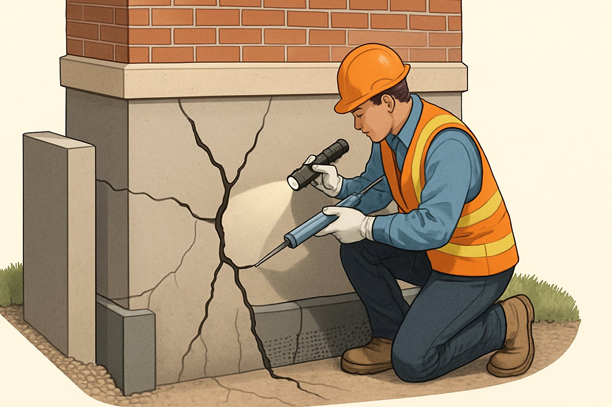
Professional crack monitoring helps determine if foundation movement is active or stable
Regional Cost Variations Across the United States
Foundation inspection costs vary significantly by location due to labor rates, local regulations, and market conditions :
| Region/City | Average Inspection Cost |
|---|---|
| Northeast | |
| New York City | $600 – $1,400 |
| Boston, MA | $550 – $1,300 |
| Clackamas, OR | $273 – $1,424 |
| South | |
| Spartanburg, SC | $214 – $1,118 |
| Palm Beach, FL | $1,083 – $1,869 |
| Houston, TX | $400 – $1,100 |
| Midwest | |
| Chicago, IL | $397 – $796 |
| Detroit, MI | $350 – $800 |
| West Coast | |
| Los Angeles, CA | $500 – $1,400 |
| Seattle, WA | $500 – $1,300 |
| Portland, OR | $400 – $1,200 |
Note: Palm Beach, FL costs appear higher because they include repair estimates in some quoted figures .
Factors That Affect Your Foundation Inspection Cost
1. Home Size and Accessibility
Larger homes require more inspection time. A 1,000-square-foot home may take one hour, while a 3,000-square-foot home with multiple levels could take three hours or more .
Accessibility factors that increase cost:
- Finished basements with limited crawl space access
- Cluttered areas requiring clearing before inspection
- Steep slopes or difficult exterior access
- Multiple structures (detached garage, workshop)
2. Foundation Complexity
Simple slab foundations are quick to inspect. Basements with finished walls, crawl spaces with limited headroom, or homes with multiple foundation types require more time and expertise .
3. Geographic Location and Soil Conditions
Some regions have unique challenges that affect inspection complexity:
4. Engineer’s Experience and Credentials
Highly experienced engineers with specialized certifications may charge premium rates. Look for :
- Licensed Professional Engineer (PE)
- ICC certifications
- 10+ years of residential experience
- Positive client reviews and references
5. Urgency and Timing
If you need an inspection immediately (for a pending real estate transaction, for example), expect to pay 20–50% more for rush service. Standard inspections typically schedule within 1–3 weeks .
6. Report Detail and Engineer’s Stamp
A simple verbal opinion costs less but isn’t useful for permits or legal purposes. A comprehensive written report with engineer’s stamp adds $150–$400 to the cost but provides documentation you can use with contractors, real estate agents, or insurance companies .
Signs You Need a Foundation Inspection Immediately
Don’t wait if you notice any of these warning signs :
Interior Signs
- Cracks in walls: Especially if they’re wider than 1/4 inch, horizontal, or growing
- Doors and windows that stick: Sudden difficulty opening or closing
- Uneven or sloping floors: Marbles rolling across the room
- Gaps around window frames or exterior doors
- Cracks in tile floors or separating from walls
- Nails popping out of drywall
Exterior Signs
- Cracks in foundation walls: Vertical, horizontal, or stair-step patterns
- Bowing or leaning foundation walls
- Chimney separation from house
- Cracks in brick or siding
- Gaps where driveway meets foundation
- Water pooling near foundation
Crawl Space/Basement Signs
- Efflorescence (white powdery deposits on walls)
- Musty odors indicating moisture problems
- Standing water or dampness
- Rotting wood beams or floor joists
- Visible foundation movement or displacement
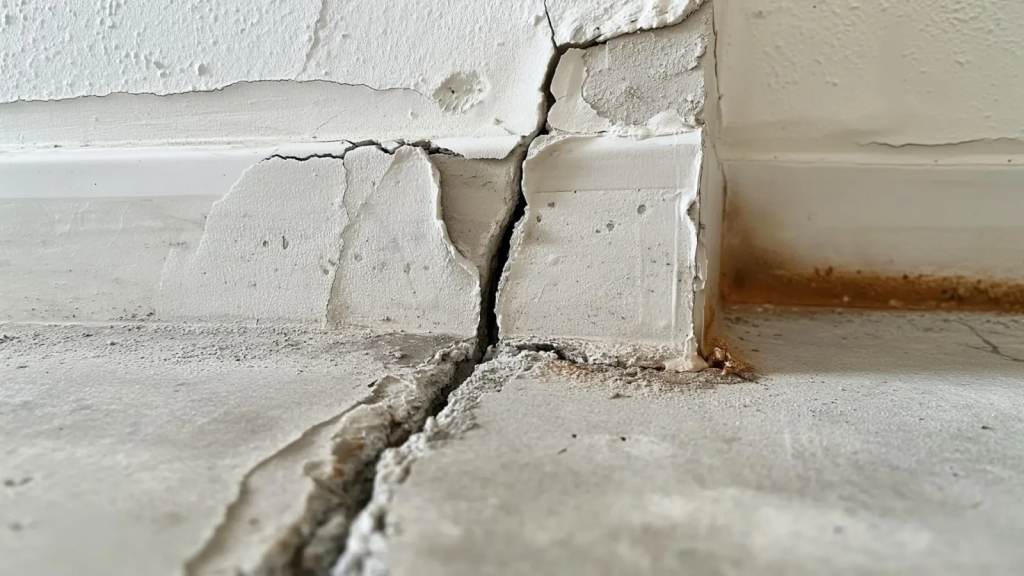
Horizontal cracks often indicate significant foundation pressure and require immediate professional evaluation
What Happens During a Foundation Inspection?
Step 1: Visual Exterior Assessment (30–60 minutes)
The engineer walks around your entire home, examining:
- Foundation walls for cracks, bowing, or displacement
- Grading and drainage around the foundation
- Condition of exterior finishes (brick, stucco, siding)
- Chimney and porch connections
- Evidence of past repairs
Step 2: Interior Inspection (45–90 minutes)
Inside, the engineer evaluates:
- All visible foundation walls (basement, crawl space)
- Floor levels using specialized equipment
- Wall cracks and their patterns
- Door and window operation
- Floor joists and support beams
- Moisture levels and evidence of leaks
Step 3: Crawl Space/Basement Examination (30–60 minutes)
If accessible, the engineer will:
- Inspect foundation footings
- Check for rot, insect damage, or deterioration
- Measure crack widths and monitor movement
- Assess moisture conditions
Step 4: Measurements and Data Collection
The engineer uses specialized tools:
- Laser levels to measure floor slopes
- Crack monitors to track movement over time
- Moisture meters to detect hidden dampness
- Tape measures to document crack dimensions
Step 5: Report Preparation (1–3 days)
After the site visit, the engineer prepares a detailed report including :
- Summary of findings
- Photographs of problem areas
- Assessment of severity (cosmetic vs. structural)
- Recommendations for repair (if needed)
- Engineer’s stamp and signature
How Long Does a Foundation Inspection Take?
| Home Size | Typical Inspection Time |
|---|---|
| Small home (1,000–1,500 sq ft) | 1–2 hours |
| Medium home (1,500–2,500 sq ft) | 2–3 hours |
| Large home (2,500–4,000+ sq ft) | 3–5 hours |
| Complex properties (multiple structures) | 4–8 hours |
Report preparation typically adds 1–3 days, though rush service may be available .
Foundation Inspection vs. Home Inspection: What’s the Difference?
| Aspect | General Home Inspection | Structural Engineering Inspection |
|---|---|---|
| Who performs | Licensed home inspector | Licensed professional engineer |
| Scope | All home systems (roof, HVAC, plumbing, etc.) | Focused on structural elements only |
| Depth | Visual, non-invasive | May include calculations, testing |
| Report | General condition assessment | Detailed structural analysis |
| Cost | $300–$500 average | $500–$1,200+ average |
| Best for | Overall home condition | Specific structural concerns |
When to call a structural engineer instead of a home inspector:
- You have visible foundation cracks
- You’re planning major renovations (wall removal, additions)
- A home inspector recommended further evaluation
- You’re concerned about structural safety
- You need engineered repair specifications
How to Find a Qualified Structural Engineer Near You
1. Verify Credentials
Look for these essential qualifications :
- Professional Engineer (PE) license in your state
- ICC certifications (International Code Council)
- 10+ years of residential experience (preferred)
- Positive client reviews on Google, Yelp, Angi
- Valid insurance (errors and omissions, general liability)
2. Ask the Right Questions
When interviewing potential engineers, ask :
- “How many foundation inspections have you performed?”
- “Are you licensed in this state?”
- “What will your inspection include?”
- “How long until I receive the written report?”
- “Do you provide repair specifications or just assessments?”
- “Can you provide references from similar projects?”
- “What is your fee structure and what does it include?”
3. Check Reviews and References
Look for patterns in reviews :
| Positive Signs | Red Flags |
|---|---|
| Thorough, detailed inspections | Rushed visits (under 30 minutes) |
| Clear explanations | Unwilling to answer questions |
| Timely reports | Vague or verbal-only findings |
| Fair pricing | High-pressure sales tactics |
| Follow-up availability | No physical business address |
4. Compare Multiple Quotes
Get at least 3–5 quotes from different engineers. This helps you understand the market rate and identify outliers .
What If the Inspection Finds Problems?
If your engineer identifies structural issues, here’s what happens next:
Common Foundation Repairs and Costs
| Repair Type | Average Cost Range |
|---|---|
| Minor crack repair (epoxy injection) | $250 – $800 |
| Major crack repair with carbon fiber | $500 – $1,500 |
| Leak repair and waterproofing | $2,000 – $7,000 |
| Mudjacking/slabjacking | $500 – $1,300 |
| Pier installation (per pier) | $1,000 – $3,000 |
| Helical or push piers (full foundation) | $10,000 – $30,000 |
| Foundation stabilization | $4,000 – $12,000 |
| Complete foundation lift | $20,000 – $30,000+ |
Your Engineer’s Role in Repairs
A good structural engineer will:
- Provide detailed repair specifications
- Review contractor bids for accuracy
- Inspect work during construction
- Certify that repairs meet code requirements
Important: Avoid letting a foundation repair company perform both the inspection and the repairs. Always get an independent engineer’s assessment first .
DIY Foundation Inspection: What You Can (and Can’t) Do
What You Can DIY
- Visual monitoring: Take photos of cracks monthly to track changes
- Moisture checks: Ensure gutters drain away from foundation
- Basic crack measurement: Use a crack monitor or tape measure
- Door/window checks: Note any changes in operation
When You MUST Hire a Professional
- Cracks wider than 1/4 inch
- Horizontal or stair-step cracks
- Bowing or leaning walls
- Floors that slope noticeably
- Multiple signs appearing simultaneously
- Before buying or selling a home
- Before major renovations
Frequently Asked Questions
How much does a structural engineer cost for a foundation inspection near me?
Nationally, expect to pay $300–$1,500 , with most homes falling in the $500–$1,000 range. Get local quotes for precise pricing in your area .
Do I need a structural engineer or a foundation repair company?
Start with a structural engineer for an unbiased assessment. Foundation repair companies may have conflicts of interest—they profit from repairs they recommend .
How long does a foundation inspection take?
Typically 1–4 hours on-site, plus 1–3 days for report preparation .
Can a structural engineer tell me how much repairs will cost?
Engineers provide repair specifications but typically don’t estimate costs. Use their report to get competitive bids from contractors .
Will my home insurance cover foundation inspection?
Usually not—inspections are considered preventative maintenance. However, if damage is caused by a covered peril (like a sudden plumbing leak), your policy may cover both inspection and repairs.
What’s the difference between a structural engineer and a home inspector?
Home inspectors provide general condition assessments. Structural engineers are licensed professionals who specialize in structural integrity and can perform calculations, design repairs, and stamp drawings .
How do I know if a crack is serious?
Generally: hairline cracks (under 1/8 inch) are often cosmetic. Wider cracks, horizontal cracks, or cracks with displacement require professional evaluation .
Is a Foundation Inspection Worth the Cost?
Yes, If:
- You’re buying or selling a home
- You’ve noticed potential foundation issues
- You’re planning major renovations
- You want peace of mind
- A home inspector recommended further evaluation
Consider the Cost-Benefit:
- Inspection cost: $500–$1,000
- Potential undetected foundation repair: $10,000–$30,000+
- Value: Early detection can save thousands and prevent safety hazards
Added Benefits
- Negotiation leverage when buying or selling
- Insurance documentation if damage worsens
- Contractor accountability with engineered specifications
- Safety assurance for your family
Final Recommendations
- Don’t ignore warning signs – Foundation problems rarely improve on their own
- Hire an independent engineer first – Get an unbiased assessment before talking to contractors
- Verify credentials – Check license, insurance, and reviews
- Get multiple quotes – Compare 3–5 engineers for the best value
- Request a detailed report – Written documentation protects you legally and financially
- Act on findings promptly – Small problems become big ones over time
Your home’s foundation is literally what everything else rests upon. Investing in a professional structural engineer for a foundation inspection provides peace of mind, protects your investment, and ensures your family’s safety for years to come.